Scientific and operational benefits
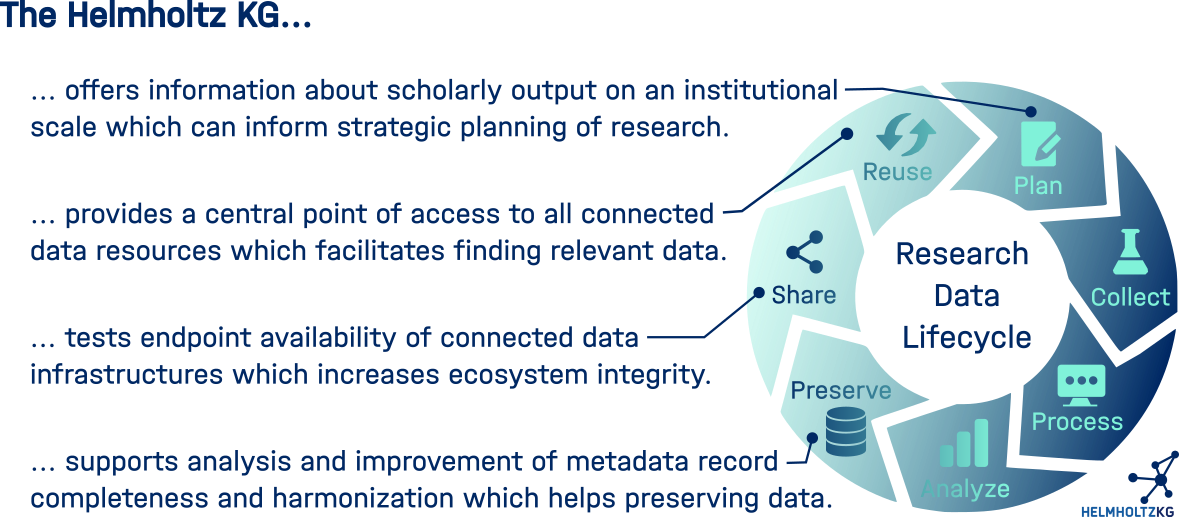
The scientific and operational benefits of the Helmholtz KG within the digital ecosystem of Helmholtz and the research data lifecycle are many-fold and multi-faceted. In addition to the examples shown below, the use and benefit of the graph differs from application to application and stakeholder to stakeholder.
Researchers (Domain & Data Scientists)
The Helmholtz-KG offers unified access to the world of Helmholtz research: Users can discover datasets, publications, software, or collaborators using search, faceted browsing, or SPARQL queries. The graph structure enables intuitive exploration, for example, navigating from a dataset to related publications, projects, or experts. Researchers benefit from the ability to quickly find relevant data and gain insights across domains without having to interact with multiple disconnected repositories. Further the graph data itself can be used directly: the Helmholtz KG offers open, machine-readible research metadata wihtin a harmonized semantic framework to build research and applications on.
Data Professionals & Data Stewards
Data stewards benefit from the aggregated metadata in the Helmholtz-KG by identifying inconsistencies, missing fields, or gaps across Helmholtz centers. The KG provides insights into schema usage and mapping consistency across repositories, helping stewards prioritize harmonization efforts and improve local metadata creation. Aggregated metrics and observations from the KG support evidence-based decisions to enhance metadata quality and interoperability throughout the Helmholtz ecosystem.
Infrastructure Providers & External Integrators
Infrastructure teams benefit from the KG’s continuous harvesting and validation of metadata sources. By continuously harvesting data from providers such as DataCite, Helmholtz Libraries, or Helmholtz Data Repositories, the invisible layers of the KG infrastructure track endpoint availability, detect downtime, and check metadata compliance with specifications. Since metadata exists in different schemas and formats, the KG selects and harmonizes the richest representations, ensuring consistent and complete records. These processes help providers maintain reliable endpoints and allow external integrators to access harmonized, high-quality data.
